
Many small businesses invest time and money into websites, social media, and digital marketing, yet still struggle to rank on search engines or generate consistent organic traffic. In most cases, the problem is not that SEO does not work. It is that businesses unknowingly make foundational mistakes that limit visibility from the beginning.
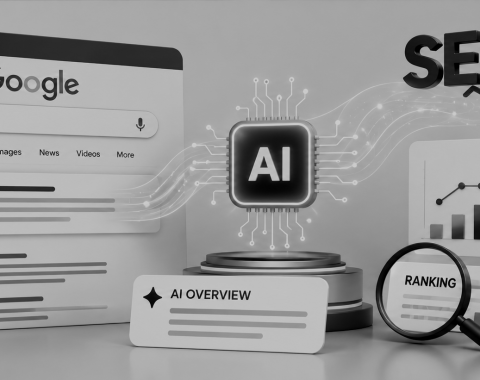
SEO in 2026 is no longer just about inserting keywords into pages. Search engines now evaluate user experience, content quality, topical relevance, technical performance, and overall website authority much more intelligently than before.
The challenge for many SMEs is that they approach SEO tactically instead of strategically. They focus on isolated actions rather than building a structured digital ecosystem.
Here are ten of the most common SEO mistakes small businesses continue to make.
1. Treating SEO as a One-Time Task
Many businesses believe SEO is something completed during website launch and then forgotten.
In reality, SEO is an ongoing process involving:
- content development
- technical optimization
- internal linking
- performance improvements
- authority building
Search behavior, competition, and algorithms continuously evolve. Businesses that stop optimizing eventually lose visibility over time.
2. Ignoring Search Intent
One of the biggest modern SEO mistakes is focusing only on keywords while ignoring user intent.
For example, someone searching:
- “best CRM for small business”
may expect: - comparisons
- pricing insights
- feature breakdowns
- recommendations
A page that simply repeats keywords without satisfying the actual search expectation is unlikely to perform well.
Modern SEO rewards relevance and usefulness more than keyword repetition.
3. Publishing Weak or Generic Content
Many SME websites contain short, repetitive, or surface-level content that provides little actual value.
Search engines increasingly prioritize:
- expertise
- depth
- originality
- readability
- engagement
Thin content often struggles to rank because it does not meaningfully help users solve problems or make decisions.
4. Neglecting Website Speed
Website speed directly affects:
- user experience
- bounce rates
- search rankings
- conversions
Slow websites create friction during the customer journey and reduce engagement significantly.
Many businesses invest in SEO while ignoring the technical performance of the website itself, limiting the effectiveness of their efforts.
5. Poor Mobile Optimization
Most traffic now comes from mobile devices, yet many SME websites still provide weak mobile experiences.
Common issues include:
- slow mobile loading
- poor layouts
- difficult navigation
- unreadable content
Search engines increasingly prioritize mobile usability because user behavior has shifted heavily toward mobile browsing.
6. Not Using Internal Linking Properly
Internal linking is one of the most overlooked SEO strategies.
Many businesses publish blogs and service pages without connecting related content together.
Strong internal linking helps:
- improve crawlability
- strengthen topical authority
- increase engagement
- guide users through related information
Well-structured websites create stronger semantic relationships between topics.
7. Focusing Only on Traffic Instead of Conversions
Traffic alone does not create business growth.
Some businesses successfully attract visitors but fail to convert them because:
- messaging is unclear
- calls to action are weak
- trust signals are missing
- landing pages are poorly structured
Effective SEO should support both visibility and conversion performance.
8. Ignoring Local SEO
Many SMEs compete locally but fail to optimize for local search visibility.
This includes:
- Google Business Profile optimization
- location-focused keywords
- customer reviews
- local content relevance
Businesses ignoring local SEO often lose highly valuable high-intent traffic.
9. Using AI Content Without Human Strategy
AI tools are increasingly used for content generation, but many businesses publish unedited AI content without adding expertise, structure, or originality.
Search engines are becoming better at identifying low-value, generic content patterns.
AI works best when combined with:
- human insight
- real expertise
- strategic positioning
- editorial refinement
The goal should not be mass production. It should be quality and relevance.
10. Expecting Immediate Results
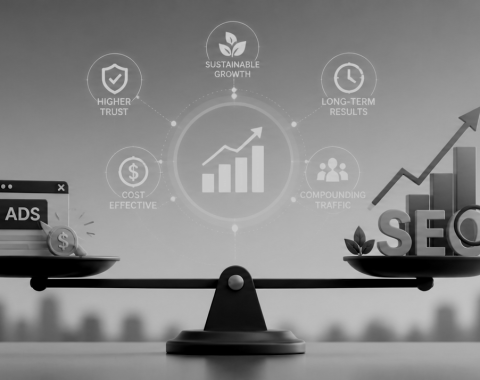
SEO is a long-term growth strategy, not an instant traffic system.
Many businesses stop investing too early because they expect rapid rankings within weeks.
In reality, SEO typically compounds over time through:
- authority building
- content depth
- backlink growth
- technical improvements
- user engagement signals
Businesses that remain consistent usually see the strongest long-term results.
Final Thoughts
Most SEO problems faced by SMEs are not caused by lack of effort. They are caused by inconsistent strategy, weak digital foundations, and misunderstanding how modern search behavior works.
The businesses succeeding with SEO in 2026 are not simply publishing more content. They are building:
- stronger user experiences
- clearer topical authority
- faster websites
- more useful content ecosystems
SEO is no longer just a marketing tactic. It is part of long-term digital infrastructure.
FAQs
What is the biggest SEO mistake SMEs make?
Publishing low-value content without understanding user intent is one of the most common modern SEO issues.
How long does SEO take to work?
SEO typically takes several months to produce strong results because authority and rankings build gradually over time.
Looking to Improve Your SEO Strategy?
Premium eBusiness Solutions helps SMEs improve SEO through technical optimization, content strategy, website performance, and long-term organic growth planning.