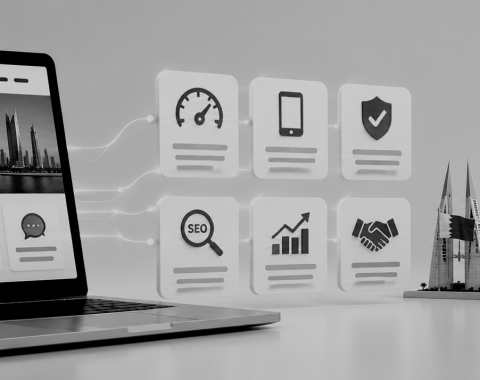
Many SMEs invest in websites, social media, SEO, or advertising individually without realizing that real growth happens when these components work together as a connected system.
This is where a digital growth funnel becomes important.
A growth funnel is not simply a marketing strategy. It is a structured process that guides potential customers from initial awareness to conversion and long-term retention.
In 2026, businesses that scale consistently are usually not relying on isolated marketing activities. They are building integrated digital ecosystems designed to attract, nurture, convert, and retain customers systematically.
What Is a Digital Growth Funnel?
A digital growth funnel is the journey users go through before becoming customers.
This journey typically includes:
- discovering the business
- engaging with content
- building trust
- taking action
- becoming repeat customers
The objective is to reduce friction at every stage while improving visibility, trust, and conversion efficiency.
For SMEs, a properly structured funnel creates predictability in lead generation and customer acquisition.
Stage 1: Visibility and Awareness
Every funnel begins with visibility.
If potential customers cannot find your business, conversion becomes impossible regardless of how strong your services are.
This stage usually includes:
- SEO
- social media marketing
- Google Ads
- content marketing
- local search optimization
- short-form video content
The goal is not simply attracting random traffic. It is attracting relevant audiences with genuine interest or intent.
Businesses that create educational and informative content generally build stronger trust early in the customer journey.
Stage 2: Website and Landing Experience
Traffic alone does not generate growth. What happens after users land on the website matters significantly more.
Many SMEs lose opportunities because:
- websites load slowly
- messaging is unclear
- navigation is confusing
- calls to action are weak
A strong growth funnel requires:
- fast website performance
- mobile optimization
- clear positioning
- conversion-focused landing pages
- trust signals and credibility elements
Your website functions as the central conversion layer of the funnel.
Stage 3: Lead Capture Systems
One of the biggest mistakes SMEs make is allowing visitors to leave without capturing information or creating follow-up opportunities.
Lead capture mechanisms may include:
- inquiry forms
- consultation requests
- WhatsApp integrations
- newsletter subscriptions
- downloadable resources
- booking systems
The objective is creating a bridge between traffic and relationship-building.
Businesses that fail to capture leads often rely too heavily on repeated advertising instead of nurturing existing opportunities.
Stage 4: CRM and Lead Management
Generating leads is only part of the process. Managing them properly is equally important.
Many SMEs lose potential customers because:
- follow-ups are delayed
- inquiries are forgotten
- communication is inconsistent
CRM systems help businesses:
- organize leads
- track conversations
- automate follow-ups
- monitor sales pipelines
Without structured lead management, even strong marketing funnels become inefficient.
Stage 5: Retargeting and Nurturing
Most users do not convert during their first interaction with a business.
This is why retargeting and nurturing are essential components of modern growth funnels.
Businesses can re-engage users through:
- remarketing ads
- email campaigns
- social media retargeting
- automated follow-up sequences
These systems keep the business visible while building familiarity and trust over time.
Stage 6: Conversion Optimization
A strong funnel continuously improves conversion performance rather than simply increasing traffic.
This involves optimizing:
- landing pages
- calls to action
- inquiry forms
- page structure
- user experience
- trust signals
Small improvements in conversion rate can significantly reduce customer acquisition costs over time.
Stage 7: Retention and Long-Term Growth
The funnel should not end after the first sale.
Many SMEs focus heavily on acquiring customers while neglecting retention and repeat engagement.
Long-term growth usually comes from:
- repeat customers
- referrals
- loyalty systems
- ongoing communication
- customer experience improvements
Businesses with strong retention systems often scale more efficiently because acquisition costs become lower over time.
The Biggest Mistake SMEs Make
Many businesses build disconnected marketing activities instead of connected systems.
For example:
- running ads without CRM
- publishing content without SEO strategy
- generating traffic without lead capture
- collecting leads without follow-up systems
A growth funnel only works when each layer supports the next.
The strength of the system depends on how effectively the entire process works together.
Final Thoughts
A digital growth funnel is ultimately about creating structure around customer acquisition and retention.
In 2026, SMEs that grow consistently are usually the ones combining:
- SEO
- websites
- automation
- CRM systems
- content marketing
- retargeting
- analytics
into one connected ecosystem.
Growth becomes far more sustainable when businesses stop relying on isolated tactics and start building integrated digital systems.
FAQs
Do SMEs really need a full growth funnel?
Yes. Even simple funnel structures significantly improve lead generation, follow-ups, and customer retention.
What is the most important part of a growth funnel?
Every stage matters, but weak websites and poor lead management are among the most common bottlenecks.
Looking to Build a Digital Growth Funnel for Your Business?
Premium eBusiness Solutions helps SMEs build integrated digital ecosystems including websites, SEO, CRM systems, automation, and lead generation strategies designed for scalable growth.